خواص ضد میکروبی رزینهای اکریلیک پلیمتیل متاکریلات با افزودن نانوذرات دیاکسید سیلیکون و دیاکسید تیتانیوم روی باکتریهای ایجادکننده پوسیدگی دندان

چکیده:
این مطالعه اثرات افزودن نانوذرات دیاکسید تیتانیوم (TiO2) و دیاکسید سیلیکون (SiO2) و ترکیب آنها به رزینهای اکریلیک و فعالیت ضد میکروبی در پلیمتیل متاکریلات (PMMA) را بررسی کرد. نمونههای اکریلیک به ابعاد ۲۰×۲۰×۱ میلیمتر با غلظتهای ۰.۵٪ و ۱٪ نانوذرات TiO2، SiO2 و ترکیب آنها (۱:۱ w/w) تهیه شدند. برای هر میلیلیتر مونومر اکریلیک، ۰.۰۲ و ۰.۰۴ گرم نانوذرات افزوده شد.
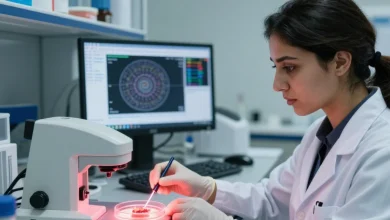
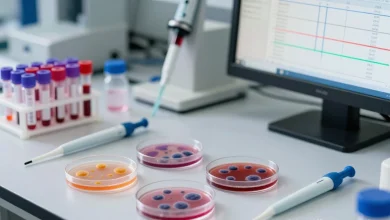
فعالیت ضد میکروبی نمونهها در برابر Lactobacillus acidophilus و Streptococcus mutans در بازههای زمانی ۰ تا ۹۰ دقیقه با روش broth dilution assay ارزیابی شد. هر گروه در سه شرایط: تاریک، نور روز و تابش UVA مورد بررسی قرار گرفت و درصد کاهش باکتریها در هر زمان محاسبه شد.
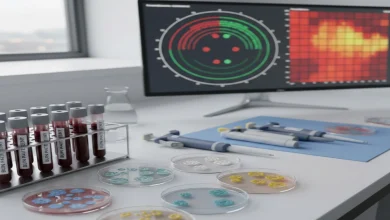
نتایج نشان داد که PMMA حاوی نانوذرات TiO2/SiO2، به ویژه تحت تابش UVA، کاهش چشمگیر تعداد باکتریها تا ۹۹٪ ایجاد کرد. نمونههای حاوی ۰.۵٪ نانوذرات یا بدون نانوذرات در تاریکی کاهش معنیداری نداشتند.
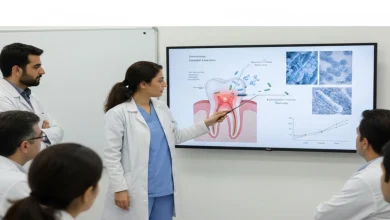
این مطالعه نشان میدهد که افزودن نانوذرات به رزینهای اکریلیک و فعالیت ضد میکروبی آنها را به طور قابل توجهی افزایش میدهد و میتواند کیفیت و عملکرد مواد دندانپزشکی را بهبود بخشد.
Abstract
This study evaluated the effects of incorporating titanium dioxide (TiO2) and silicon dioxide (SiO2) nanoparticles on acrylic resins and their antimicrobial activity in poly(methyl methacrylate) (PMMA). Acrylic specimens measuring 20×20×1 mm were prepared with 0.5% and 1% of TiO2, SiO2, and their 1:1 (w/w) mixture. For each milliliter of acrylic monomer, 0.02 g and 0.04 g of nanoparticles were added to achieve 0.5% and 1% concentrations, respectively.
The antimicrobial activity of the specimens against Lactobacillus acidophilus and Streptococcus mutans was assessed at 0, 15, 30, 45, 60, 75, and 90 minutes using the broth dilution assay. Each group was tested under dark, daylight, and UVA conditions, and bacterial reduction percentages were calculated at each time point.
Results showed that PMMA containing TiO2/SiO2 nanoparticles, especially under UVA exposure, significantly reduced bacterial counts up to 99%. Specimens with 0.5% nanoparticles or without nanoparticles in the dark showed no significant reduction.
These findings indicate that adding nanoparticles to acrylic resins enhances their antimicrobial activity and can significantly improve the quality and effectiveness of dental materials.
💡 برای مشاهده جزئیات کامل آزمایشها و نتایج دقیق مطالعه اثرات ضد میکروبی نانوذرات در رزینهای اکریلیک، همین حالا متن کامل مقاله را بررسی کنید.